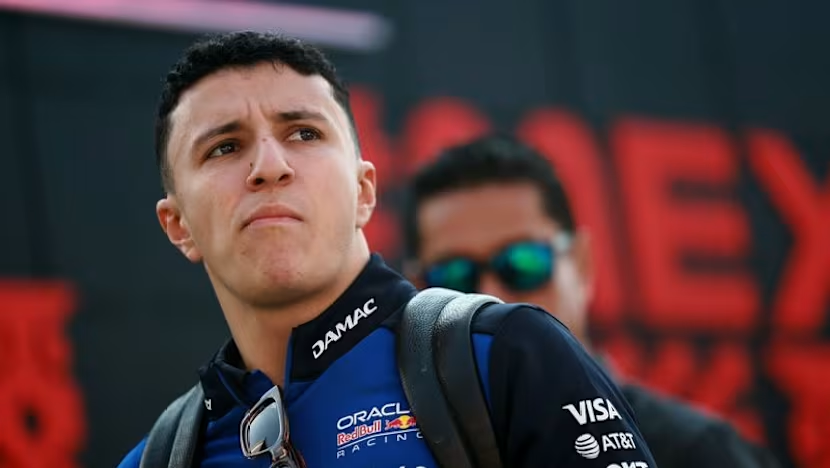
A formal warning is the right outcome for Isack Hadjar, but it is not the most important part of the Mexico City story. The stewards found that the Red Bull driver breached the regulations when he pushed away a guest in the paddock on Friday. Hadjar was hurrying to first practice and had stopped to pose for a photograph with a young fan when a man approached him in what the stewards described as an "aggressive manner". Hadjar's response, placing a hand on the guest's waist and then pushing him aside with an open right hand, was wrong. Nobody should be physically moved away by a driver, however crowded the route.
Still, the stewards themselves pointed to the conditions that produced the moment. They said the action was uninvited and aggressive, that the driver did not have sufficient security, and that others had experienced problems moving through the paddock. A security person was walking behind Hadjar but could not intervene in what the stewards called "tantamount to an invasion of the driver's private space". That sentence should worry anyone who runs a Formula One event. A driver walking to a session should not be cornered by a stranger with no one close enough to step in.
The sport has spent years trying to bring fans closer to its stars, and that effort has real value. Access to the paddock sells tickets and builds loyalty. But access without a clear barrier between a driver's route and an unpredictable crowd is a gamble that someone eventually loses. Here, the loser was partly the driver, who was penalised in the record, and partly the guest, who ended up on the receiving end of a shove captured in a tense public moment.
What should happen next is simple. Organisers should review how drivers are escorted through the paddock on race weekends, with enough security staff positioned to act before a confrontation begins rather than after. Drivers should be given a clear protocol for handling unwanted approaches that does not involve physical contact. Fans who want photographs should be able to get them through arranged, supervised moments rather than chance encounters on a rushed walk.
Hadjar has been warned, and the message is that a driver's temper cannot be the security plan. The stewards were right to note the mitigating factors, but they also exposed a gap that the sport cannot afford to leave open. Fixing that gap will do more to prevent the next incident than any warning letter.