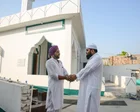
Partition cut Punjab in two in 1947 and drove out much of its Muslim population, leaving hundreds of village mosques abandoned, desecrated or turned into cattle sheds and storage units. For decades, that wound seemed to define the region's memory of itself. The reporting from Punjab suggests something different is now taking shape: rural Sikh and Hindu communities quietly restoring those places of worship for their Muslim neighbours.
The clearest example is Jakhiwal, in Fatehgarh Sahib district. Gajju Khan, 87, has not heard the azaan in his village since he was eight years old, and the new mosque there has been funded almost entirely by Sikh and Hindu residents. Bibi Rajinder Kaur, 77, a Sikh, persuaded her grandson to donate farmland for it, saying the 18 Muslim families had been forced to walk 4km to another village just to pray. Her reasoning, that the land had seen blood and needed an act of atonement, is one a national debate about communal harmony could learn from.
The same pattern appears in places with few or no Muslim residents. In Punawal, Jaspal Sharma, from a family of Hindu priests, gave land for a mosque opposite his own house, and his village of 550 households contributed money, bricks and cement. In Malerkotla's Umarpura village, Sukhjinder Singh Pandher describes Eid and Gurpurab being celebrated with equal fervour. These are not grand political gestures. They are neighbourly acts, and that is precisely why they matter.
Read against the rest of the country, these villages deserve more attention than they usually get. The report notes that online life is marked by immense polarisation, while the people building these mosques are choosing to protect one another. Maulana Muhammad Usman Rehmani Ludhianvi, the shahi imam of Punjab, says more than 165 such mosques have been supported by non-Muslim villagers in the past nine years. That figure should be a national story, not a footnote.
The lesson is not that Punjab's past is healed. Many mosques were lost for good, and the Muslim families who remain are few. But the work now underway suggests that the people most directly touched by partition's violence are often the first to refuse its logic. Governments and media should document and support such efforts, and ordinary citizens elsewhere should ask why a village with a handful of Muslim families can do what much of the public conversation cannot.