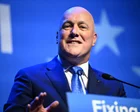
New Zealand's election has produced a result that no party can yet claim as a mandate. On preliminary counts, the centre-right National party, led by Christopher Luxon, has 42 seats, with its traditional partners Act on 13 and New Zealand First on 12. That gives the incumbent bloc a combined 67 seats, a majority so thin that it depends on votes not yet counted. Labour, led by Chris Hipkins, has 35 seats, with the Greens on 16 and Te Pāti Māori on five, leaving the left bloc just three seats short.
The core problem is not who is ahead. It is that the country has been asked to accept a government in waiting while the final count is still incomplete. Special votes made up 21% of the total in 2023, and in that year they helped the Greens and Te Pāti Māori win three seats between them. Official results are not due until 27 November, and the country faces a two-week wait for special votes to be announced before negotiations can even begin. That is a long time for a democracy to operate in a state of suspended certainty.
Luxon's decision to say that caretaker conventions apply and that the daily business of government will continue is the right message, but it should not be treated as a reason for complacency. Caretaker arrangements exist to prevent a government from making major decisions it may not keep. Ministers, officials and the prime minister should be open about any significant commitments made in the coming weeks, and parties should publish their coalition positions as soon as the counts are final.
The bright spot in this result is Opportunity, the centrist newcomer that stands at 5.9% and has met the threshold to enter parliament. No new party has done that under the mixed-member proportional system since 1996, and its arrival deserves attention. It also highlights an uncomfortable truth: the overhang seats that National and Te Pāti Māori have won could push the next parliament to 130 members, a record, and make the path to 65 seats harder to predict.
New Zealand should use this uncertainty to demand clarity rather than accept drift. Parties should tell voters, before the final count, how they would negotiate and what they would prioritise. The weeks ahead should be a test of whether politicians can turn a razor-thin result into a stable and accountable government, not a contest over who can outlast whom.