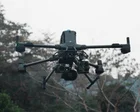
Germany has reportedly banned commercially available Chinese-made drones from its military bases and training grounds. The reason given is security. According to Der Spiegel, the drones were acquired by military units in recent years with limited bureaucratic oversight, and the defence ministry was not immediately available for comment. The decision is sensible, but it also exposes a failure of procurement discipline that should worry anyone responsible for national defence.
The problem is structural. Local commanders were allowed to buy drones under a 2024 strategy that included a "white list" of approved systems, several of them made by China-based DJI, the world's largest drone maker. Yet, as Der Spiegel reported, there is no central record of purchases by individual units, so the military has had to impose a blanket ban. A military that cannot account for the equipment it has bought on its own bases has a visibility problem that no white list can fix.
The wider pattern is what matters. Poland barred Chinese-made vehicles from its military facilities in February, and the US military banned BYD electric vehicles from Kadena airbase in Okinawa. The Dutch intelligence service warned that smart features in modern vehicles could be used by hostile states to spy on people, without naming countries or manufacturers. European MEPs have now asked the EU cybersecurity agency to assess whether BYD should be treated as a high-risk supplier, citing China's 2017 national intelligence law. BYD says no data can be remotely accessed from China. That denial deserves to be tested, not simply accepted.
The honest counterargument is that no official has publicly identified a specific threat, and that some of these measures may be precautionary. Governments should be willing to say that. But a precaution is cheap when it protects sensitive sites, and the costs of being wrong about a compromised device on a base are far higher than the cost of a few inconvenienced procurement officers.
My conclusion is that Europe should move from ad hoc bans to a clear standard. Every military buyer should maintain a central inventory of connected devices, and the EU should publish an assessment of the BYD question on a fixed timetable. Governments should test manufacturers' data claims independently rather than rely on company statements. Germany has done the right thing in pulling the drones. The next step is making sure its military, and its allies, can actually say what equipment is on their bases.