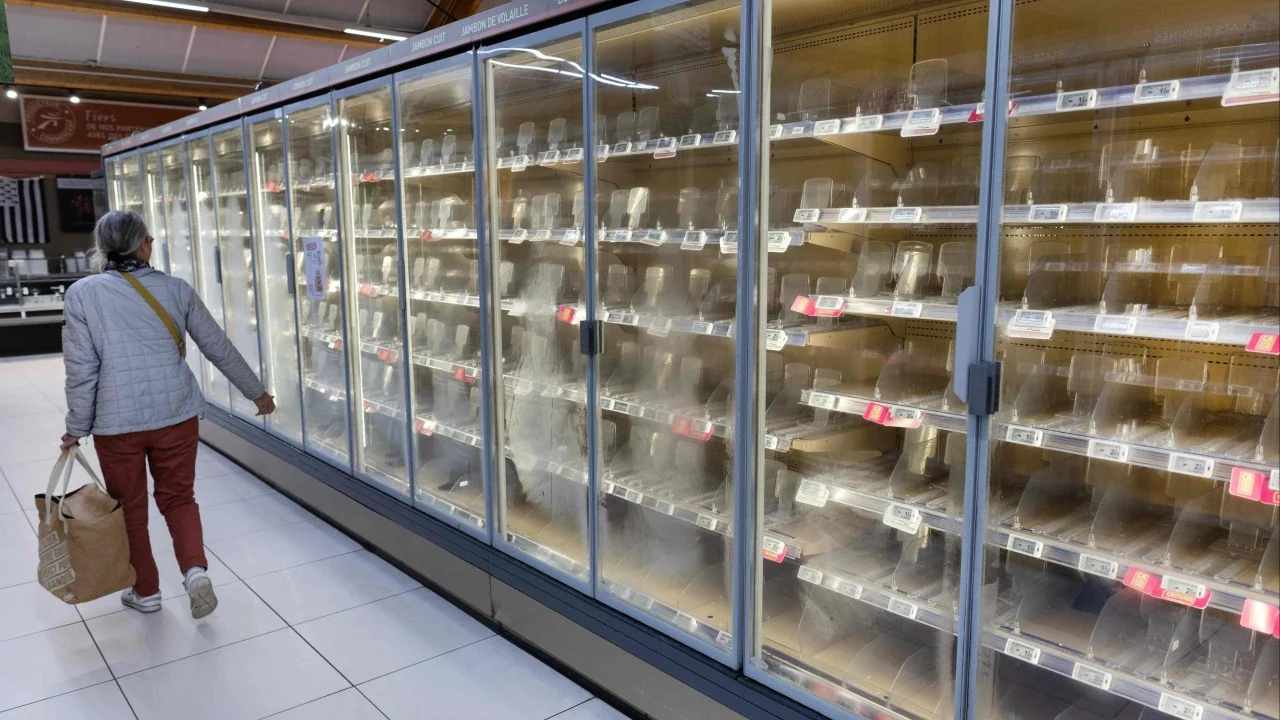
When supermarket refrigerators across France began running too warm on October 11 and 12, the damage was not abstract. Stores in several places were forced to throw away entire inventories of perishable food. What looked at first like a technical glitch, a matter for maintenance crews, turned out to be something far more serious: a deliberate cyberattack on the country's food supply chain.
On Monday, Foreign Minister Jean-Noel Barrot went further than most governments would in such a case. He said the attack was carried out by the Islamic Revolutionary Guard Corps of the Islamic Republic of Iran. That is a direct accusation against a state security force, not a vague warning about unknown hackers. Paris has also summoned Tehran's envoy and is pushing for sanctions at the European level. Those are the right steps for a government that says it has been attacked.
Some readers will ask whether a fridge hack deserves this response. It does. The report describes attacks that targeted around 700 sites, which means the reach was wide, not a single unlucky store. A campaign of that scale, aimed at everyday infrastructure, is exactly the sort of hostile act that should not be shrugged off because nobody was physically hurt. Spoiled food is a real loss for businesses and for shoppers, and it shows how easily digital sabotage can reach ordinary life.
Europe should respond with more than statements. If the accusation holds, the EU should treat state-linked cyber sabotage as a shared problem and agree on sanctions that make clear the cost of such operations. Individual capitals acting alone can summon envoys, but only a common European position carries real weight.
Still, a responsible column must note what remains open. The report presents the French government's account, and the attribution rests on that official claim. Citizens and allies are entitled to see the evidence behind it before sanctions are finalised. Demanding proof and acting firmly are not in conflict. France should make its case publicly and let Europe judge it.