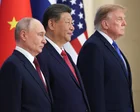
This is an opinion column, marked as such by its framing and analytical voice rather than news reporting. The Guardian Asia source presents the Shenzhen meeting of Xi Jinping, Donald Trump and Vladimir Putin as a summit with few concrete outcomes.
Per the source, the joint statement covered four topics: boosting energy supply, reforming the United Nations, limiting the powers of the International Criminal Court, and a tentative commitment to discuss nuclear disarmament and non-proliferation. The writer says the statement offered little detail on how any of these would be carried out.
The column also says Putin described the meeting as a "new page in the history of diplomacy," and that Putin said his relationship with Trump rested on "similar civilisational values." The writer argues the meeting gave Putin a visible show of respect from Trump and Xi, and that Trump appeared to treat Putin as almost a wartime ally. The writer attributes a comment to former British foreign secretary Jeremy Hunt, who said the summit showed Trump was no longer leader of the free world.
The writer contrasts Shenzhen with the 1943 Tehran and 1945 Yalta meetings. The writer also notes that the same day the International Court of Justice found Myanmar guilty of genocide, and that the Shenzhen statement did not name that court.
The column acknowledges that the meeting could still lead to future dialogue, and that private talks on Iran, UN reform or Ukraine may be taking place out of public view.